
The best FPS games on PC
Set your sights on the best FPS games


What would PC gaming be without first-person shooters? Nothing, that's what. Aiming down a little sight and unloading a clip into a hapless individual who's just trying to enjoy their evening? Priceless. Particularly when there's some serious stakes, like robbing them of loot they're trying to extract or a foiling their flanking route with a predictive charge. We won't forget the singleplayer epics or co-op capers or indie boomerangers, so don't worry if you'd rather elevate your own evening rather than spoil someone elses.

The best FPS games on PC
Below you can find our list of the best FPS games on PC, a bit like if your clip contained bullets, but those bullets contained paragraphs of pure wisdom... and if you we shot you with them. For this year's update we've replaced four entries with shinier sequels (or pseudo-sequels) and chucked in two new kids: Counter-Strike 2 and Straftat. Why? Because they both capture purity, with Counter-Strike rewarding patience over brute force and Straftat distilling daft 1v1/2v2 combat into the health shot equivalent of chilli oil and gasoline.
- Severed Steel
- F.E.A.R.
- Boomerang X
- Titanfall 2
- Halo Infinite
- Deathloop
- Rainbow Six Siege
- Warhammer 40,000: Darktide
- Turbo Overkill
- Neon White
- Hunt: Showdown
- Team Fortress 2
- Devil Daggers
- Doom: The Dark Ages
- Left 4 Dead 2
- Superhot
- Deep Rock Galactic
- GTFO
- Half-Life: Alyx
- Half-Life 2
- Dusk
- S.T.A.L.K.E.R. 2: Heart Of Chornobyl
- Apex Legends
- Destiny 2
- Counter-Strike 2
- Straftat
Severed Steel

Severed Steel is all about sick stunts. Wall runs, somersaults, dolphin dives, slick slides: if you want it, Severed Steel has it. As you run around each mission while pulling off stunts and completing objectives, you shoot voxel dudes with their voxel guns that you pick up on the go. As you shoot your guns and arm cannon, bodies and walls will explode in a glorious shower of destruction. Oh yeah, you have an arm cannon! It does big damage, and Severed Steel's destructible voxel arenas (am I saying "voxel" enough?) become your playground when you start blasting through walls.
Severed Steel can feel disorienting at first, but it's rather forgiving. You won't take damage as long as you simply keep moving, so it's all about chaining stunts together to close the distance between enemies and take them down before they land a single shot. It's the complete opposite of Superhot's near-constant slow-mo, but it makes you feel equally badass.
F.E.A.R.

Monolith's horror-shooter hybrid is a certified classic, where you're a lad with a gun and you pepper soldiers with bullets in dimly-lit office spaces. It's a wonderful FPS exercise in impact, where bullets actually transfer their energy and momentum into bodies, sending them ragdolling through splintered glass. As Adam Smith points out in his Have You Played... F.E.A.R.? piece, the office environments do get a bit repetitive, but the action keeps your trigger finger itching for more.
The best thing about F.E.A.R. though? Its bullet time, baby. At the press of a button you can slow time to a crawl and see your bullets slide through the custard of time before exploding in a paste of jam. Not only does it lend fights a sense of cinema, it brings out that sicko in you that longs for more jam. And that hunger for jam is strengthened by the game's exceptional AI, which Samuel Horti sang the praises of here, in this very piece.
Boomerang X
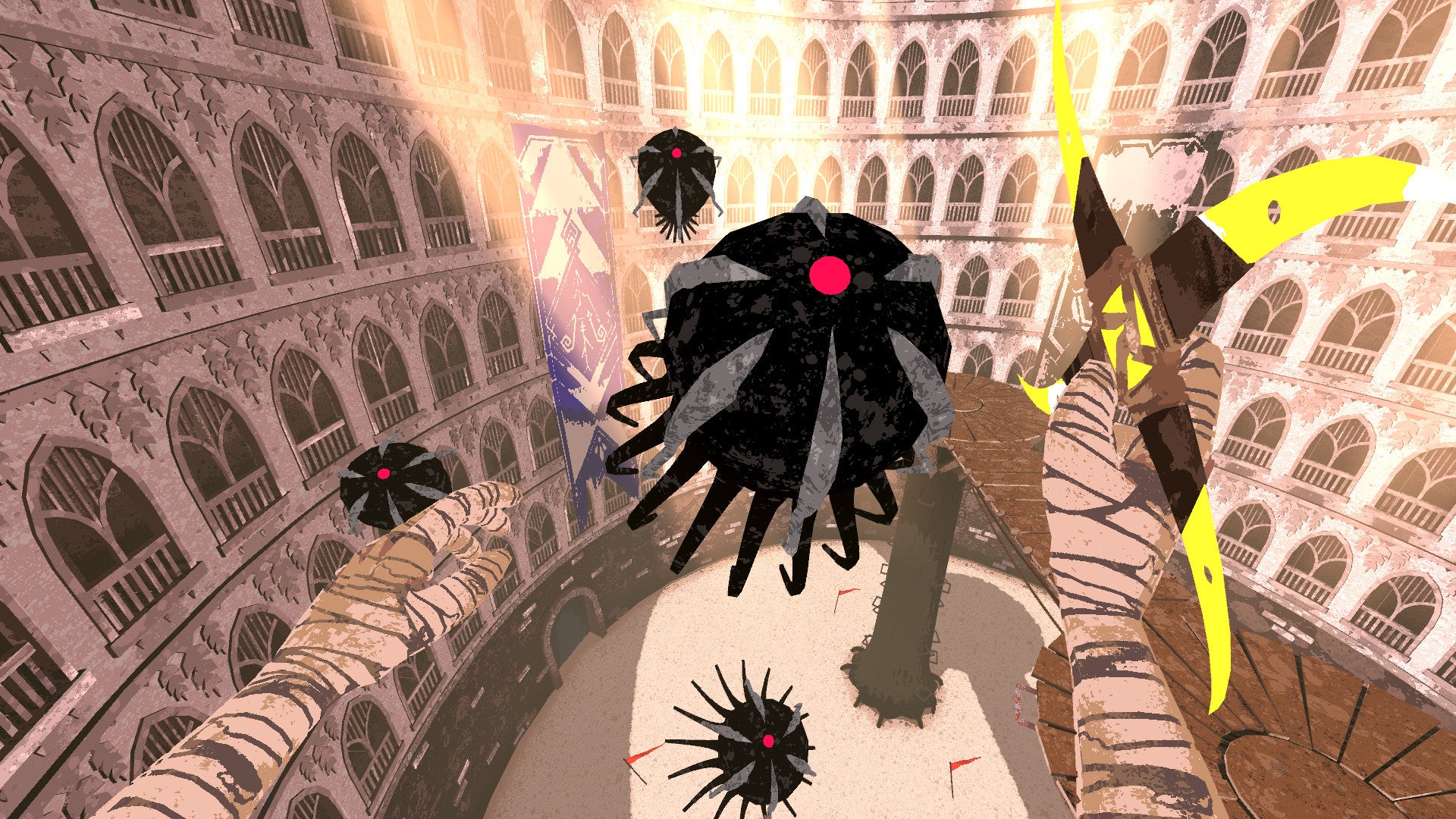
It's safe to say that I was blown away by Boomerang X. As I said in my Boomerang X preview back in the day, it's the DOOM game I always wanted and it may have ruined FPS games for me. Guns are overrated - boomerangs are the new hotness.
Boy does the boomerang feel good to fling, and you'll quickly get access to a handful of superpowers that'll only make the wooden spinner even more fun to use. Like the ability to teleport to it mid-air, or the ability to slow-time to a crawl as you line up that perfect shot. Combat is remarkably fluid and there's barely any downtime. It's fast, frenetic, and a whole heap of cool. String together a flawless succession of moves, and trust me, the feeling is unrivalled.
Titanfall 2

Titanfall 2 could have been the best singleplayer FPS of 2016, if it hadn't been for the new Doom. Nonetheless, if you want straight-up action thrills with a whole lot of flash, some particularly glorious movement and impressively stressful mech-based boss fights, this is going to make you very happy. And hey, there's a robust soldiers vs giant robo-suits multiplayer mode in there too, building on what the multiplayer-only original established.
That is, assuming you can find opponents. Titanfall 2's servers aren't exactly bursting with players but it does still have an active community if you login at the right hours. Still, the real highlight lies in its singleplayer campaign, which Adam Smith describes as bringing the "thumping brilliance of the gunplay and the elegance of the traversal system to a series of beautifully crafted levels" in his Titanfall 2 review. It is, however, on the brief side, so we strongly recommend playing on Hard difficulty - as well as making it last longer, it makes the mech fights particularly feel that much more satisfying once you finally claim a steel scalp.
Halo Infinite
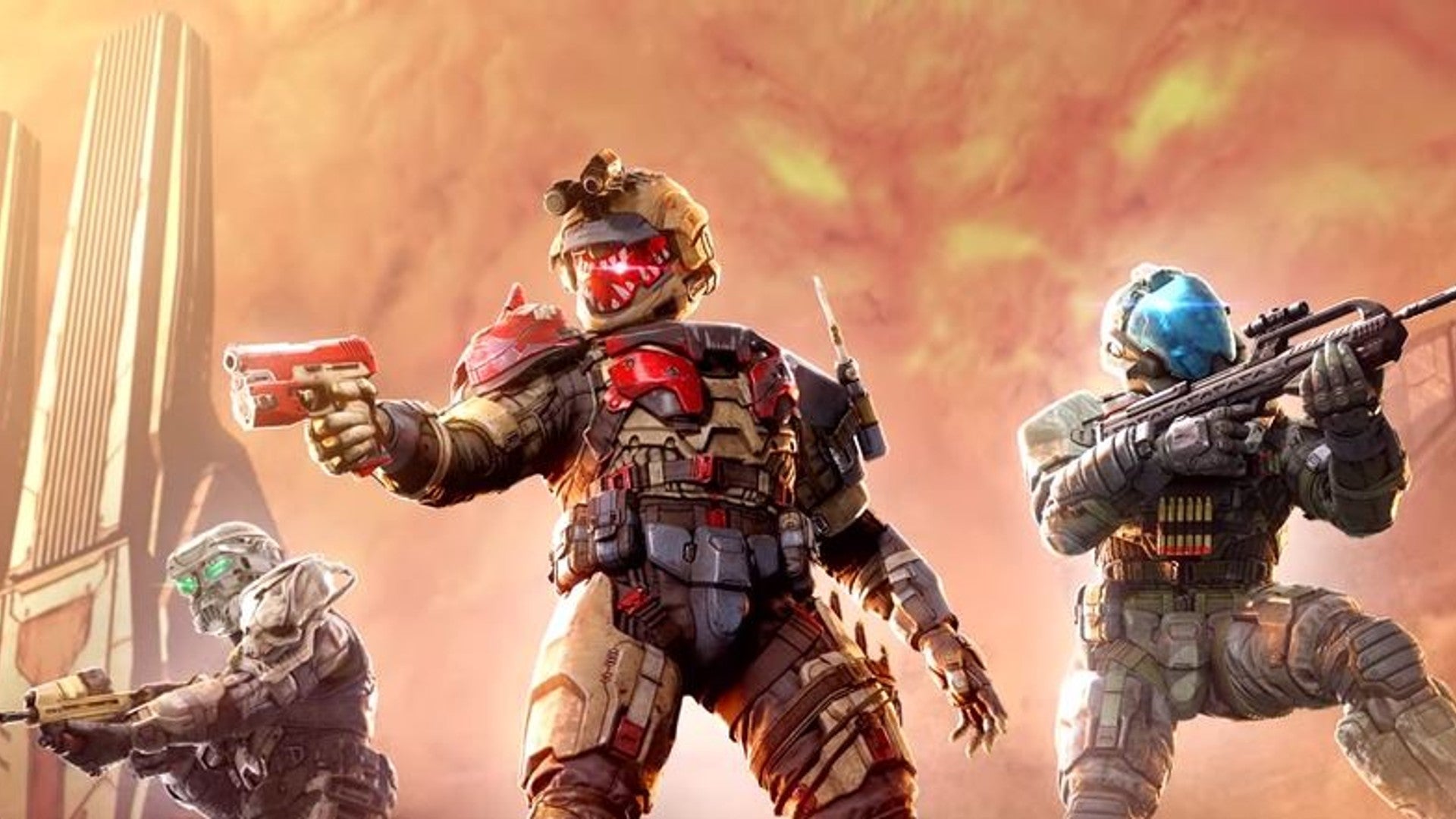
Halo Infinite's initial multiplayer launch was a bit of a bummer, ie. there wasn't a whole lot pal. A few modes, a few maps, a painfully slow battle pass to grind through. Since then, it now feels like an actual Halo sandbox with Forge as the, uh, sand that players can mold to their fancy. There's a PvE mode as well as Firefight, King Of The Hill, and the like; a real comeback story for John Halo, let me tell you.
If you're after something a bit bigger than Halo's multiplayer arena shooter, then check out the sprawling open world campaign. Sure, an open world Halo might not have been on your wishlist, but careening around huge spaces in a Warthog while gunning down grunts and hoovering up collectibles is like a bigger and better version of Combat Evolved's infamous Silent Cartographer level. If you simply miss the Halo of old, then don't panic. Halo Infinite still has plenty of linear levels sprinkled throughout that feel like traditional Halo. Read more in Brendy's Halo Infinite review.
Deathloop
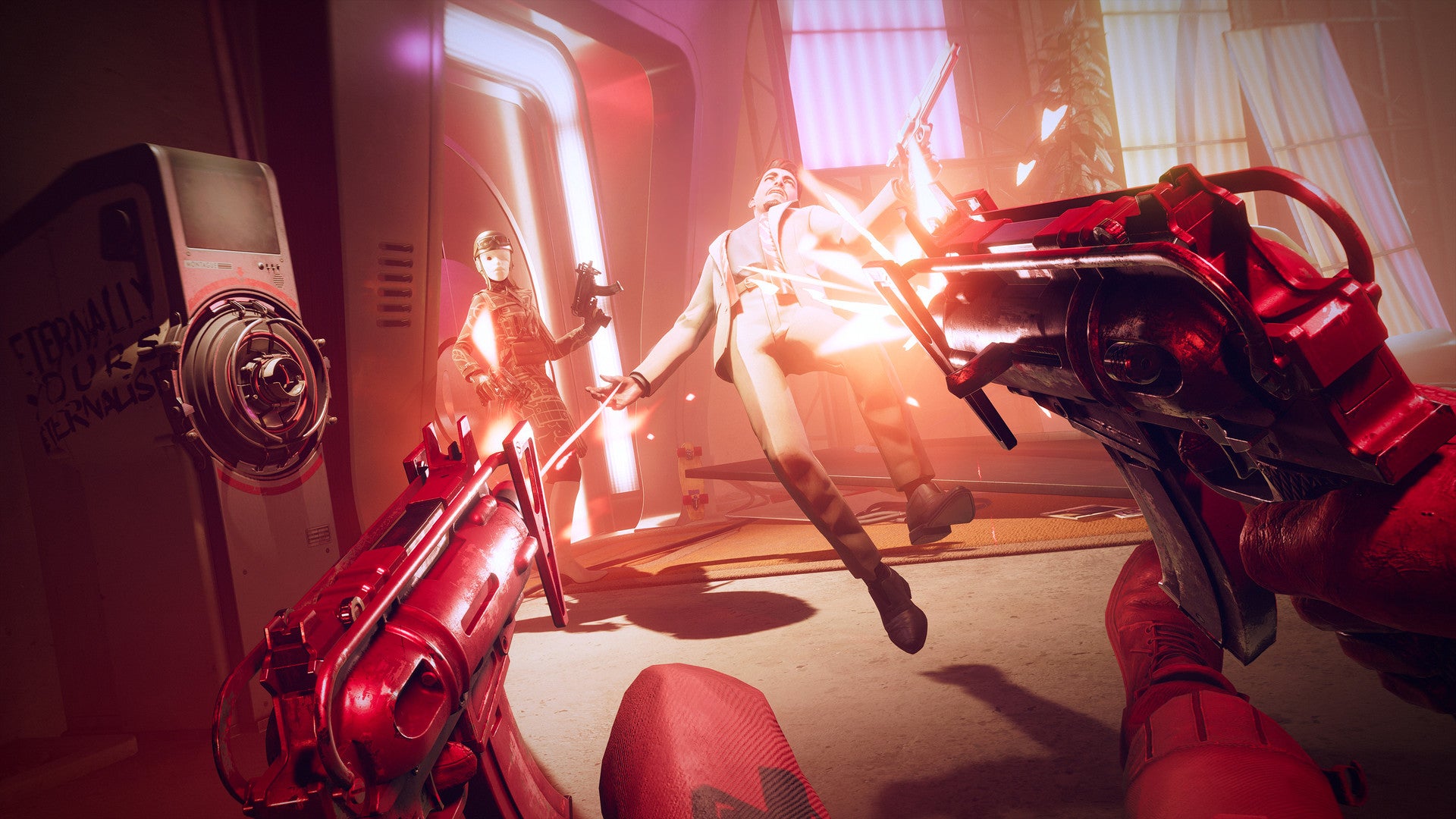
In Deathloop, a puzzling plot sends you back through a repeating timeloop while you figure out how to assassinate eight visionaries. They're a bunch of nasties on an island, and if you manage to kill all eight in one night, you can free yourself from the timeloop. The day is split into four sections - morning, noon, afternoon, and evening - and you can only enter one of four areas per chunk. The visionaries move between the four areas throughout the day, so the puzzle is finding a routine that lets you kill all eight. That usually involves finding the moments when they pair off, so that you can execute a sneaky double assassination.
Only, Deathloop isn't actually that sneaky. Unlike its predecessors in Arkane's Dishonored franchise, Deathloop focuses heavily on action, relishing in the FPS joys of headshotting a bunch of enemies. Time is a weird soup, after all, and death doesn't really mean anything when you're trapped in a loop. So, kill, die, and kill some more. It's a liberating cycle that allows you to really go wild and experiment with playstyles, as you don't need to worry about future repercussions of your actions if you never make it past today. As Brendy says in his Deathloop review, though, "Just know that those who prefer the quiet quicksaveyness of the Dishonoreds will grumble at the inability to use all their powers, the shift to shootybang, the disappearance of non-lethality and corpse hiding - all the signposts of a true immersive sim."
If you're fine with all of that... great, nice, good. In the chaotic action, you'll meet Julianna. She's another assassin, but her target is you. Julianna can be controlled by an AI, but the real fun begins when another player takes on the role and invades your world. When Julianna invades, you become trapped in your current area until either one of you dies, or you manage to hack an antenna that allows you to escape. Invasions often result in a tense game of cat and mouse, followed by a huge firefight in which both players use every weapon at their disposal. It's an explosive end to most missions that delivers frenetic action and memorable multiplayer moments.
Rainbow Six Siege

Rainbow Six Siege does what Battlefield games have thus far only pretended to do: provide a multiplayer world which is destructible at a granular level. Instead of buildings collapsing when scripted levers are pulled, in Siege almost every door, window, wall, ceiling, and floor can have a hole poked in it via gunshots, grenades, battering rams and breaching charges.
It feels like technical wizardry and the consequences ripple throughout the entire experience. It creates tension as you fear being blasted from any angle, and encourages teamwork through asymmetric missions which force one team to defend themselves against the other's attempt to breach their compound
It's equally impressive for being a team-based multiplayer shooter that feels fresh, offering something different from the Counter-Strikes and Call of Dutys while staying true to the spirit of the Rainbow Six series. And as Adam Smith said in his Rainbow Six Siege review (whose sentiments still apply to this day), its "as effective a depiction of close quarter first-person combat as I've ever seen."
Warhammer 40,000: Darktide

When the RPS Hivemind reviewed Darktide at launch, we liked its bone-crunching co-op but felt its progression system lacked inspiration. Then came a wave of updates, to the point where we thought "Huh, this is worth playing". And what is it, you might ask? It's a murderous game where you mulch baddies with hammers and raggedy guns, all set in the Warhammer universe, of course. You have classes, you level up, you become permanently stronger. All of which to mulch more enemies in increasingly difficult missions and increasingly brutal ways. It's very much a horde shooter in the same vein as, say, Left 4 Dead 2 or Darktide's predecessor Vermintide, so don't expect anything particularly nuanced or tactical.
But there is joy in its mega-murder: James reckon the game's a melee combat rhythm game in disguise, and Alice Bell just wanted to walk around it and look at stuff, given it's stunning architecture. Alice O disliked its tedious grind, yet enjoyed the unique challenge of playing Darktide with rubbish weapons and no talents.
Turbo Overkill

Turbo Overkill is a retro-inspired FPS following in the footsteps of Quake and DOOM, albeit with a techno twist. You'll charge around arenas slaughtering all sorts of enemies, but along the way you find augments that you can install to gain new powers. That could be a subtle boost, such as extra armor on getting a chainsaw kill, or something a little more chaotic, such as massive explosions whenever you hit the ground. Traversing the map to find those upgrades is a treat, too, as Turbo Overkill constantly propels you forward with incredible speed through its neon-filled streets.
We gave Turbo Overkill a bestest best when it launched in early access in late 2021. But, to reiterate one of the most salient points: you have a chainsaw for a leg. Fun times follow, as you can use that chainsaw leg to skid and slide around while tearing through baddies. They explode in violent bursts of blood, but there's no time to stop and look at your victims, as Turbo Overkill is all about delivering that huge damage with speed and style.
Neon White

Carrying on from Turbo Overkill, here's another game that's about running fast. Neon White is a speedrunning FPS in which you use cards to either kill nasty demons, or launch yourself towards the goal in hopes of shaving off half a second.
It's that second part that's really fun, as each of Neon White's levels quickly become complex puzzles to solve. It's easy to get stuck in a loop of just running the same route over and over again, sure, but taking the time to step back and wander around the level to see every avenue and secret passage will give you insight into other potential paths. And then you run it and complete the mission an entire second faster. A second! Few things feel better than that. As Rymarr Williams said in his Neon White review, "I think I'm gonna try for a new best time again", which largely sums up how moreish this game can be.
Hunt: Showdown 1896
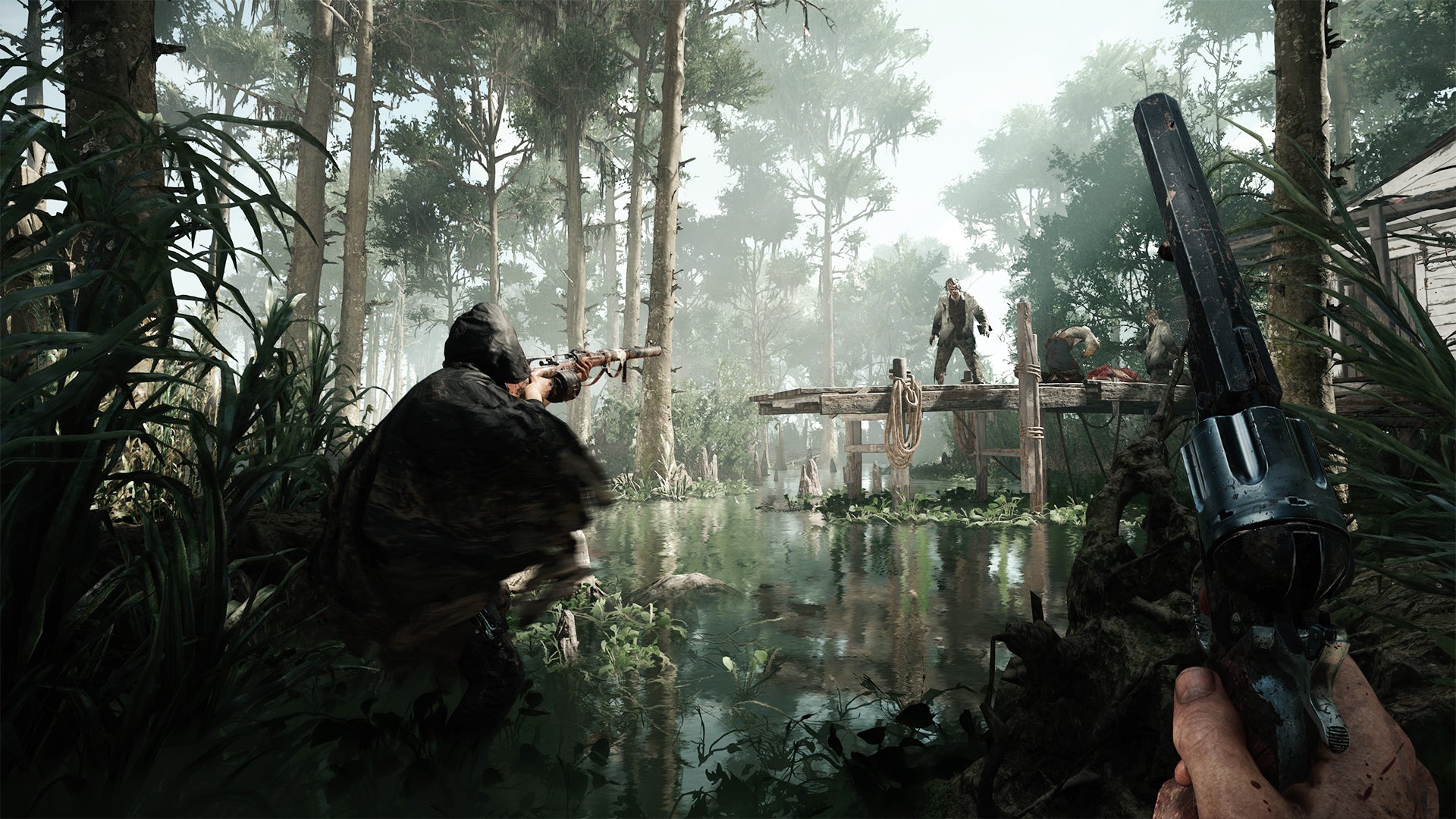
Hunt: Showdown 1896 is much like its predecessor Hunt: Showdown, and that's because they're the same... but different. The difference being that 1896 was Crytek's way of sticking it into a new engine, alongside some new UI, weapons, and tools. All in all, it's a slicker experience whose contents we neatly packaged up in some news we covered when it first dropped.
Hunt getting slicker is a good thing, as at its core it's an extraction shooter like no other. Its greatest strength is its outstanding audio design, which only serves to add to its already nerve-shredding atmosphere. Taking on the role of hunters who must assassinate an AI "boss" tucked away somewhere is gold, too, as other squads stream in to steal your bounty. Read more in Ollie Tom's Have You Played... Hunt: Showdown? piece for extra tidbits on why its so special.
Team Fortress 2

That Team Fortress 2 is a sequel and a remake of a sober-as-a-nun multiplayer mod seems almost irrelevant now. But it’s part of what makes the game so important. Valve took years and years to settle upon a model for what has become one of the firmly-entrenched favourites of the PC gaming fraternity, and that they did so allowed it to prove that a multiplayer first-person shooter can be funny, even witty, and that constant experimentation and progression can keep a game alive and evolving long after it should have ground to a halt.
Team Fortress 2 felt like an experiment, and it still feels like an experiment, and that experiment was a success. A move to free-to-play and a hat-centric economy has kept TF2 thriving. The cost of this is that something of the original spirit was perhaps lost in this translation to gimmee, gimmee, gimmee, but we can forgive that. Especially when Craig Pearson's Team Fortress 2 review still holds weight to this day, having called it "the best game I've ever played". So many people still indulge and there's no sign that's stopping anytime soon.
Devil Daggers

2016 was in many ways a vintage year for first-person shooters, and the reason for that was because they understood their past. DOOM, obviously; Overwatch returned to Team Fortress rather than COD; Titanfall 2 was the big sci-fi silliness of the noughties again and Devil Daggers... well, Devil Daggers is from an alternate timeline where Quake changed everything and was never forgotten in favour of military men and careful plots.
A beautiful hellscape of big square pixels against a midnight backdrop, monstrous things looming at you from the darkness, and the dance, the endless dance. A pure test of everything that first-person shooters ever taught us. Reflex, awareness, movement, practice, true grit and no surrender. It is about your own time and only about your own time, because that is all that matters - everything else that shooters ever added is mere fluff. "Death isn't even an inconvenience - it's a chance to reset and apply new learning", said Adam Smith in his Devil Daggers review, if you ever needed more of an excuse to enter its arena of "grinding bones and rattling insectoid limbs".
DOOM: The Dark Ages

DOOM: The Dark Ages might be besotted by "bland storytelling" as Nic Reuben says in his DOOM: The Dark Ages review, but this is a simple shooter where you take command of John DOOM and grind demons to shreds with shotguns, bat them with shields, and roast them on the back of some dragon. If there's one thing you should know about Dark Ages, it's that you need to keep on the move.
By "on the move", I mean what James Archer puts more articulately than me in his "James and Nic Kick A Thing" chat about the Dark Ages. "The relatively modest spectacle of TDA's quick hits don't just make it less conspicuous that you're repeating them, it also helps them slip in more seamlessly to the moment-to-moment brawling without halting the sense of momentum", he says, when describing how its baddie-bouncing feels slicker to him than predecessor DOOM Eternal.
Left 4 Dead 2
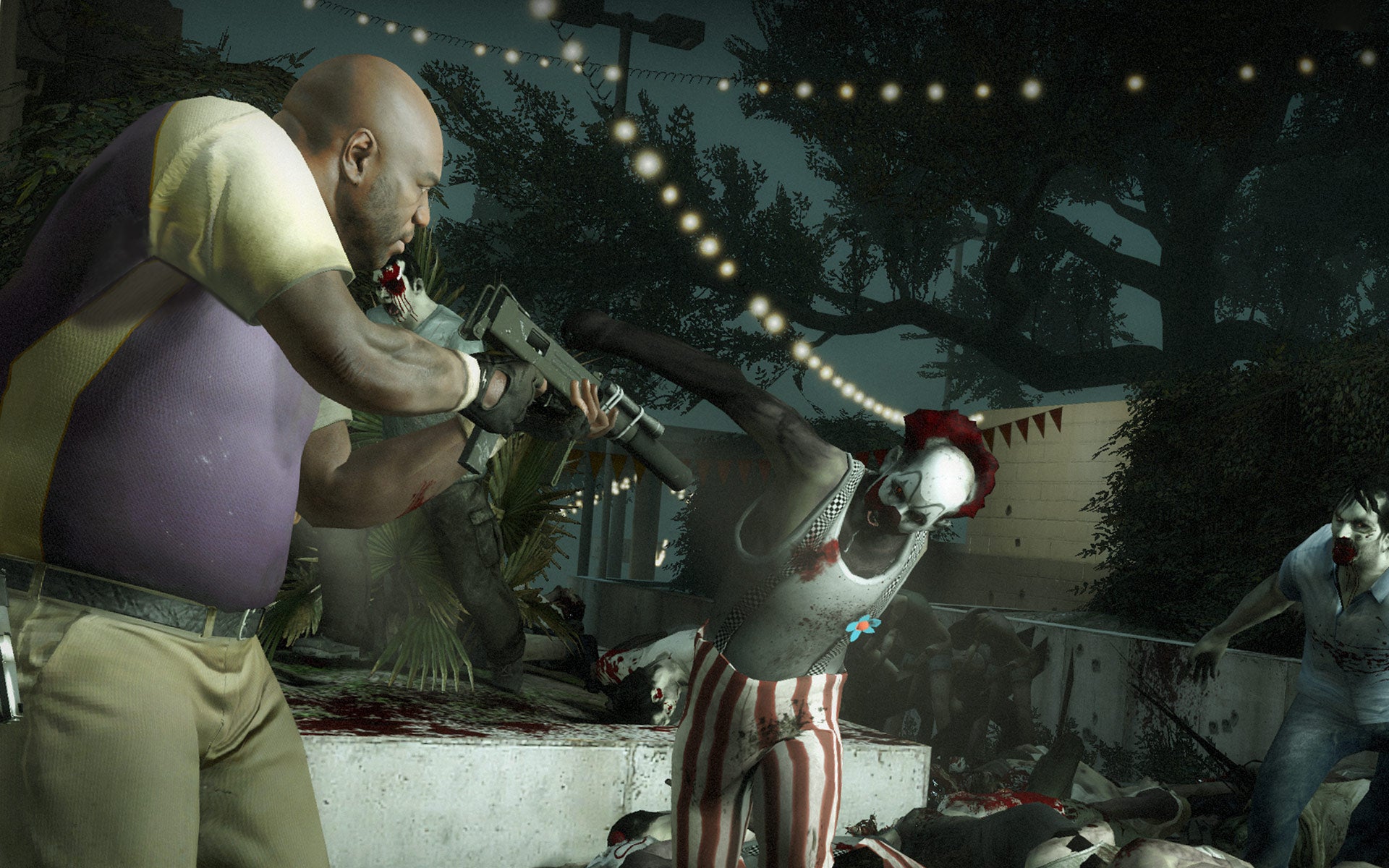
Zombies: in 2008 they were still very exciting. They still are today when blessed with Valve's magic touch, which in a few, brief, cyclic co-op skits adds more life, wit and hinted-at history to its characters and its world than most of the singleplayer campaigns in this list stuck together. Including Left 4 Dead 2 in the list was complicated, however, given most of what makes it to strong was work done by the previous year's Left 4 Dead. It's a sequel not that different to the original, and not a game that I felt, on its first outing, really changed anything. However, it's clear with time that Left 4 Dead 2 was a major under-the-hood upgrade, and as John Walker said in his Left 4 Dead 2 review, "Every aspect of it is designed around how people play games, and indeed how people played Left 4 Dead 1". It's both closer to what was intended for the zombie-blasting horror game, and also a bigger move in the direction of pure co-op, which wasn’t something that even seemed possible before the let's-all-die-together first Left 4 Dead came along.
Another strong reason to choose this over the original Left 4 Dead (which still has a more memorable cast of Survivors, to my mind) is how much it's been expanded by mods. You can stick Deadpool in there, expand it from a four player game to a 16-player one, or recreate pretty much the entirety of Left 4 Dead within it. Get thee to the Steam workshop and indulge.
SUPERHOT / SUPERHOT VR (2016)

There ain't nothin' new under the sun - a miserable claim that SUPERHOT Team disproved twice in one year. First there was SUPERHOT itself, a shooter in which time only moves when you move (or shoot) (or throw something) (or punch). Then there was SUPERHOT VR, which singlehandedly redeemed the whole concept of virtual reality and easily made it into our pick of the best VR games.
SUPERHOT is both maximum-adrenaline thrills and highly tactical - transforming the first-person shooter from a game about precision aiming and reflexive movement into one in which every twitch counted. The world is super-slow-mo until you do anything, which grants you the time to plan the move but leaves you subject to a devious puzzlebox construction in which one action leaves you vulnerable to some other threat. It is sublime, and it is impossibly cool. And Alec Meer called it a game that "allows you to cherish every moment", in his SUPERHOT review.
Particularly in VR, where you are making those movements yourself - the ducking, the punching, the throwing, the shooting. The Matrix fantasy without any of the bilge - just superhot action. A glorious, glorious reinvention of first-person violence. "If you have a headset, SUPERHOT VR is mandatory" says Alec Meer in his Have You Played... SUPERHOT VR? piece. Of course Alec would've said that. He's a super hot guy. Okay, let's move on.
Deep Rock Galactic

Deep Rock Galactic combines drunk dwarves with some complex tunnel systems and lots of nasty subterranean bugs. The result is often sheer chaos, as four players charge into the depths to mine whatever they need for the big corporation in the sky. You pick a role, each of which has a unique weapon and traversal mechanic, and zip through the caves at incredible pace, collecting ores as you head towards a main objective.
The chaos comes when you're trying to wrap your head around these main objectives, connecting winding pipelines or powering huge machines, while fending off those blasted bugs that just won't stop. As you go, hordes of creepy critters will charge in your direction. A rational team might fight them together, deploying traps and getting into a strong defensive formation, but I find the fun in panickedly running away and screaming. But, whether you play Deep Rock Galactic as a true co-op shooter or as a wild romp in the caverns, it's sure to be a good time. Read more in Nic Reuben's Deep Rock Galactic review.
GTFO

Hurtling down into the dark depths of GTFO's Rundowns (levels) is a terrifying start. What's even more terrifying, though, is when teammates don't work together. We tend to quickly designate a leader when I play with friends, but someone always wanders off a little too far or fails to follow orders. Lots of screaming, shooting, and swearing ensues. It's pure chaos with a horror-filled flair, and it's a great time online. It demands teamwork and precision if you want to survive, but that fills every encounter with a level of tension that few other FPS games reach.
That tension is only heightened by the enemy variety crawling around every level. You never know what might lie behind each door, but spotting a Scout's tendril as you enter a new area could spell the end of a run. The thrill of needing to adapt to whatever you find, and often sneak past enemies to preserve resources, makes GTFO "the best way to panic as a group since Killing Floor" according to Matt Cox's preview write up way back when.
Half-Life: Alyx

Alright, yes, you'll need a VR headset for Half Life: Alyx, alongside a powerful enough rig to run it nicely. But, if you've got both of these things, then you're in for a treat.
Graham said in his Half-Life: Alyx review that this is "the Half-Life game you've been waiting for, even if it's not the one you were expecting". And this is because the game's been designed with VR in mind. You're now able to reach out and touch City 17, and the motion control shooting "feels better than Half-Life's combat ever has".
And Half-Life: Alyx embraces horror too, with moments where you're cowering in corners or chucking objects to distract enormous monsters. You're even able to cover your mouth with your actual hand, and have it replicated in-game. It's very much been lifted by VR, and not harmed by it.
Half-Life 2
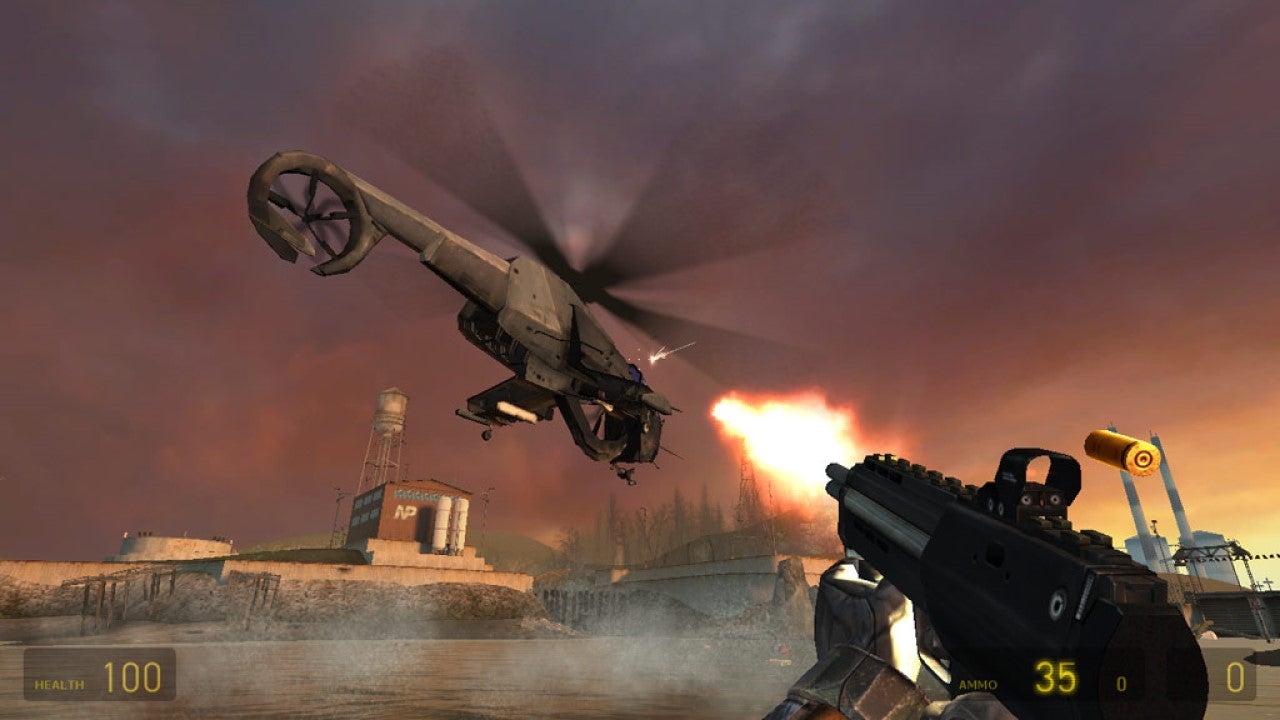
Of course. So much is in Half-Life 2, from an unprecedented level of architectural design to facial animation which rendered anything else obsolete overnight, to a physics system which transformed shooter environments from scenery into interactive resource, to some of gaming's most striking baddies in the Striders and a huge step forwards in making AI companions believable and likeable.
It's also a long, changeable journey through a beautifully, bleakly fleshed-out world, and although of course you are on the hero's journey, it's careful to keep you feeling like a bit player in a wider conflict. That this, plus the cliffhanger ending of Episode 2, left so much more to be told leaves PC gaming in a perpetual state of frustration that the series has, publicly at least, ground to a halt. I don't think all of it is as striking as it once was - particularly, much of the man-shooting feels routine and slightly weightless now - but Half-Life 2 gave us more than any other first-person shooter before, and maybe even since.
And hey, if you've got a VR headset and would like to free your gord, well, Half Life 2 VR is possible. And Liam felt playing it in VR gave it a new lease of life 20+ years on saying, "Most VR games don’t offer the same degree of freedom as Half-Life 2, and this was a game originally designed to be viewed on a CRT and controlled with a mouse that has a ball in it. It’s incredible". That's pretty neat.
Dusk
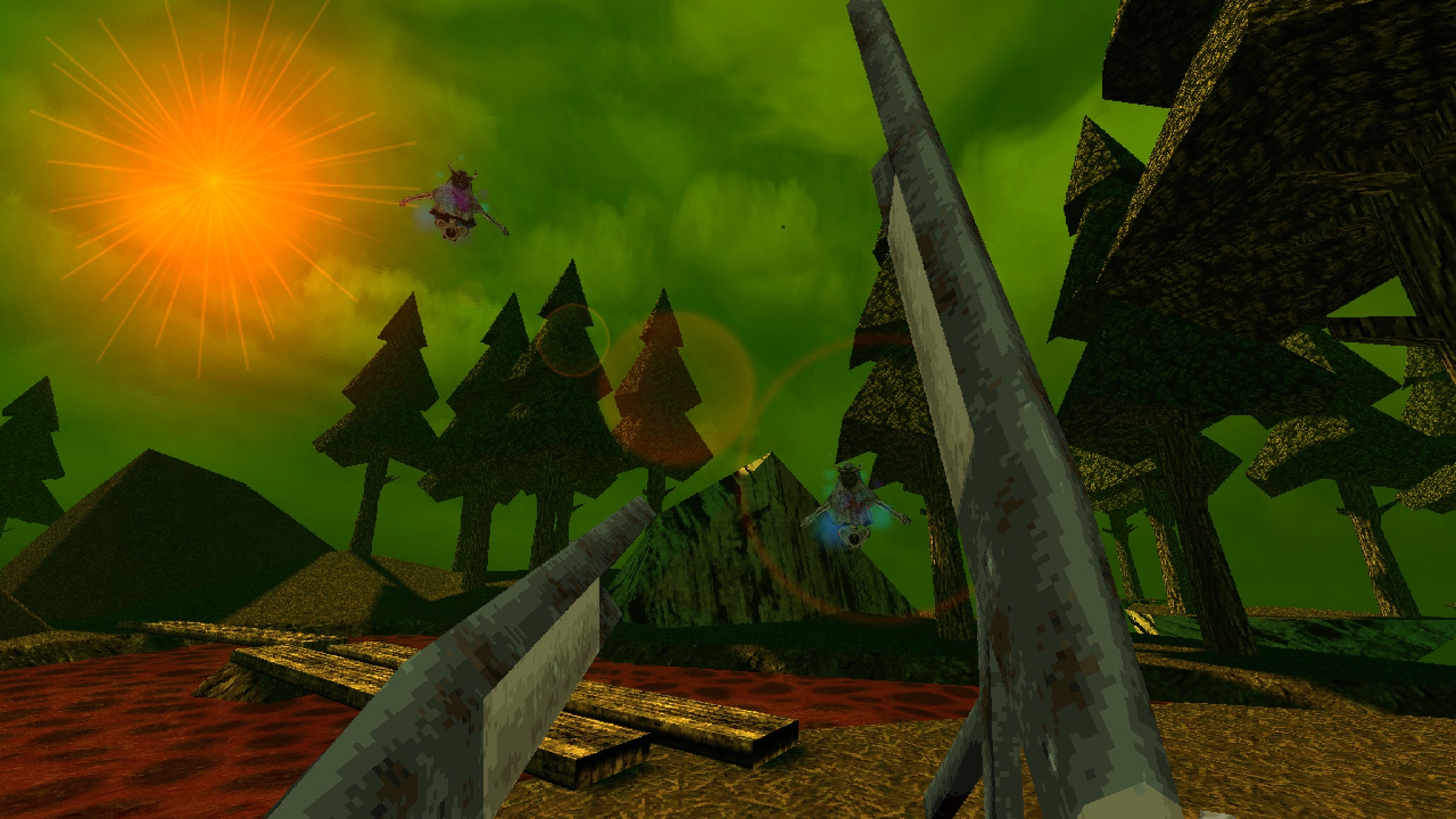
DUSK is a retro-styled FPS that's retro, but doesn't get stuck trying to mimic retro. It has the gut-spilling impact of the genre, yet mixes it with modern twists: like picking up items to create impromptu climable routes to hidden areas, or just slinging saw blades and soap at foes.
There's a lot of coloured-key collecting to open doors in DUSK, but it's spread across loads of complex, batshit maps that only get better as you barrel through through its campaign. John Walker called its level layouts "as good as anything from the '90s heyday of the genre" in his DUSK review. There is, of course, a metal soundtrack paired with a level of spookiness designed to make you both enjoy the riff and jump out of your chair within five seconds of one another. Please don't skip out on this.
S.T.A.L.K.E.R. 2: Heart Of Chornobyl
sta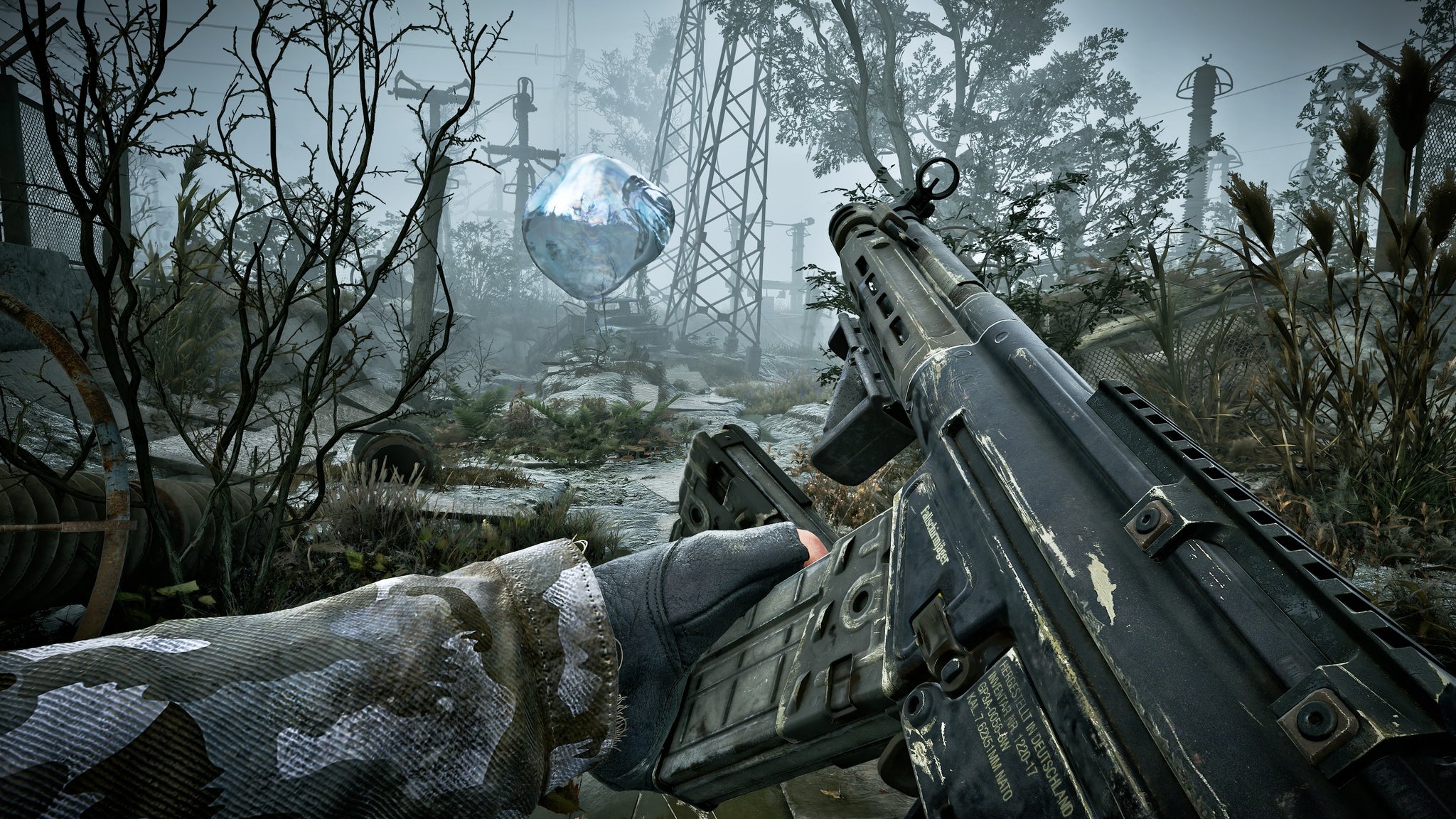
S.T.A.L.K.E.R. 2: Heart Of Chornobyl (Stalker 2, because spelling that out on keyboard is hellish) is an atmospheric survival FPS. You skulk about an apocalyptic wasteland filled with bloodied mutants that'll want to gnaw on your marrow for breakfast. The plan? Keep an eye on your ammo. Make sure your gun doesn't jam. Plot routes on a map so you know where you're going and don't bump into mutants that want to gnaw on your marrow for breakfast.
The atmosphere is what really makes Stalker 2 sing, though. It's tense and lonely and eery, with whirling dust storms and thick with an electric dread. You never know when something might spring out at you, or what treasures that decrepit multi-storey car park might be hiding. No, it might not be your thing. But if it sounds like it might be, then do give James Archer's Stalker 2 review a read. He'll sell the complete experience to you better than I can.
Apex Legends
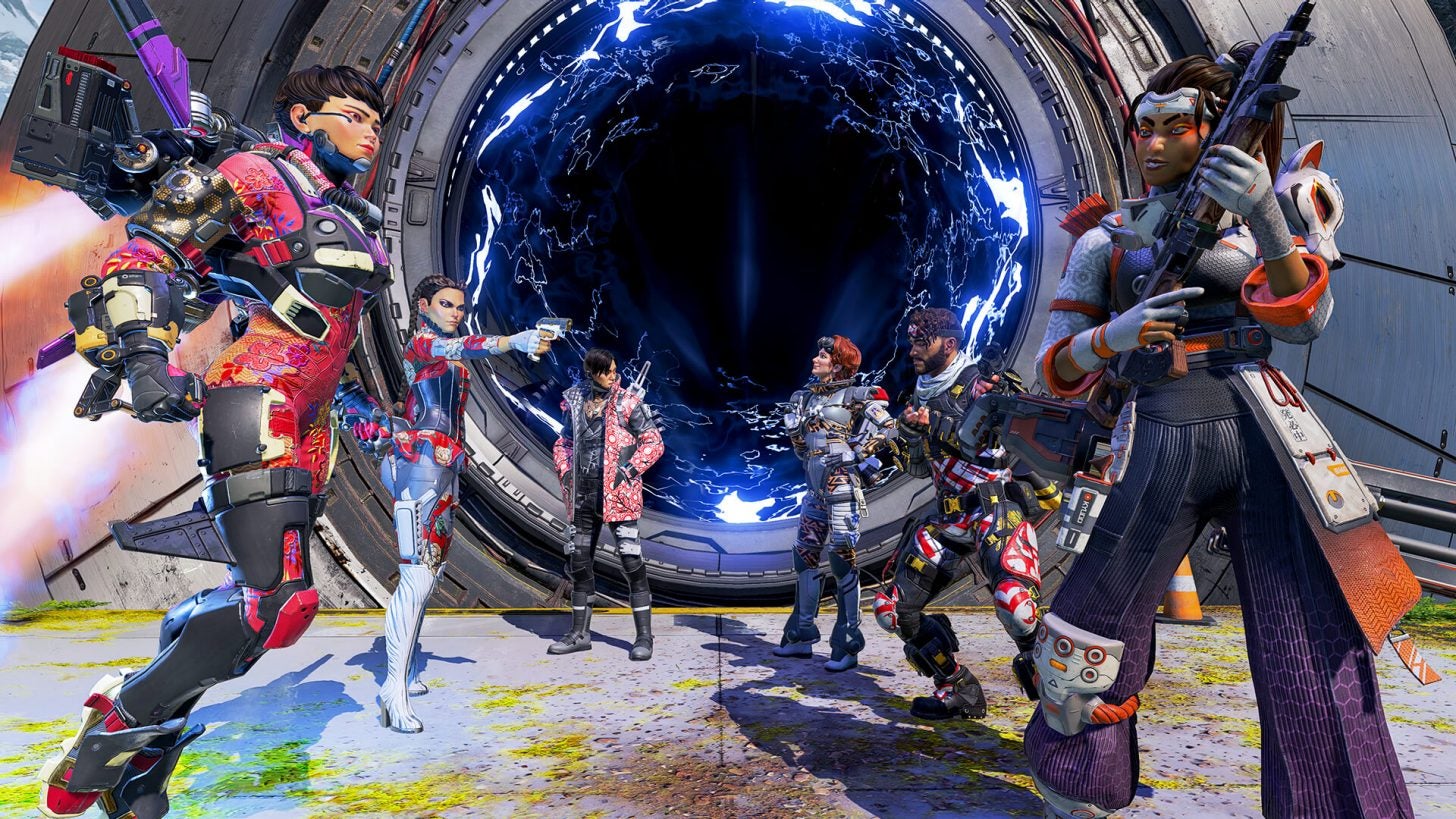
Oh my, Apex, what excellent bumslides you have. What solid shootsing you offer. What a delightful bunch of canyons and swamps you’ve plonked us in. We should have known better than to doubt the makers of Titanfall 2’s robot antics. Since its launch Apelegs has added plenty of new characters, new maps, and even a new Arenas mode.
It's a solid murder hike every time you dive into Apex Legends, and Ed's a big fan of it's butt-sliding, which gets you into fights where wins feel like "strategic triumphs". Read more in his Have You Played... Apex Legends? tidbit.
Destiny 2

Destiny 2 is an incredibly fluid MMO FPS with some of the best shooting around, but that's only the tip of the iceberg. Whether you want to team up with others to topple big bosses, turn on your fellow players and slug them with a shotgun in Crucible's PvP modes, or play through epic stories that span the solar system, Destiny 2 has something for everyone. Whichever activity you prefer, you can easily sink hundreds, if not thousands, of hours into it, and the brilliant gunplay makes it a constant joy. There's something truly lip-licking about swinging electro swords and firing off a golden gun imbued with solar energy to kill massive raid bosses in a bid to save the solar system.
Destiny 2 has so much to love, but that doesn't mean it's without fault. The onboarding experience is incredibly awkward for newbies (go and watch Liam and Ed's video diving into Destiny 2's strengths and weaknesses, please) and Bungie's looked at the sunset and gone, "Yeah, let's do that" for older content. The original Red War campaign? Fired into the sun. Forsaken? Kicked to the curb. Only Shadowkeep onwards remain playable and newer expansions aren't quite up to par with the excellent Final Shape. If anything, confidence in the game's future is at an all-time low given Bungie's situation, despite them saying they "want to keep building Destiny".
However, it's a testament to Destiny 2's strengths that we still recommend it so highly. It's a masterful FPS with so much fun to be had, regardless of whether you prefer PvE or PvP. And, with so much content available for free, there's no really no reason not to give it a go. So, off you pop, go decrypt some engrams, get some snazzy armor, and start shooting aliens. Eyes up. Guardian.
Counter-Strike 2

Counter-Strike 2 is special, namely because it's a tactical FPS that truly rewards solid fundamentals: aim, patience, movement. If you learn good crosshair placement, when to take fights, and how to stop dead before you shoot (among other strafing strats), you'll be rewarded with success. But it's not a flashy success. It's a "wp" from your teammates after what could be interpreted as an understated moment of brilliance only other Counter-Strike players can interpret.
And after many, many years, it replaced Counter-Strike: Global Offensive. And if you're not tuned into Counter-Strike, you might be thinking, "Well, isn't it just the same?". No, not really. It's got a new engine under the hood that lets explosives briefly blast windows of opportunity out of smoke grenades. There's small map tweaks, like the odd box being popped at a slight angle. Guns feel ever so slightly different. You now lose any ammunition left in your clip when you reload. It's all the stuff you'd only notice as someone who speaks the language of Counter-Strike, which is to say, you should try and speak it, too. Many try to emulate it (cough, Valorant, cough), but they can't. Go read Ed Thorn's Counter-Strike 2 review for a sense as to why it's a special thing.
Straftat

Straftat is what you'd get if you took the feeling of those early arena shooters and distilled them into a tight FPS that only focused on that thing. It pits players in 1v1 or 2v2 battles (2v2 in particular, left Brendy smiling "as widely as ever") across tightknit maps where the main objective is to gib. If you do not gib more than the opponent, you lose.
To be honest, Rick Lane sums it up really nicely in his Straftat review: "There have been various attempts to rekindle the arena shooter in the last decade, from Epic’s aborted Unreal Tournament revival, through Doom 2016’s disappointing multiplayer offering, to Bethesda’s more successful spinoff Quake Champions. Straftat, though, outguns them all, huffing casually on its cigarette as it knee-slides into the future."
Read this next
- Bungie decide their destiny is to do more Destiny after all, pledging to bring back vaulted Destiny 2 campaigns while declaring that Marathon "needs to evolve"
- "A dried husk of a product": former Doom producer berates Microsoft for making Halo a "mid-tier" game and mourns the "financialisation" of AAA
- Valve considered making a new VR game for the Steam Frame, before tackling the "ludicrous" task of getting Half-Life: Alyx running standalone
