
The best space games on PC
Make your milky way over to the best space games on the planet


Video games are all about whisking us away to other worlds: fantastical, abstract, a cabin in the woods, a post-apocalyptic Los Angeles. Space, though, space captures a very different feeling to the rest. It's one of endless possibility and discovery, where you can rocket around a universe filled with stars and asteroids and meet goofy aliens who trade in slime and levitating metal rods.
Much like the vacuous expanse of space itself, the number of space games out there is overwhelming. But thanks to us, RPS (Reminding People Space-is-good), we've put together a list of the best space games on PC right now. Whether you're a budding space captain, a budding botanist who wants to inspect weird flora, or a tyrant who wants to chomp down on an entire galaxy with your maw of hatred, there's a space game for you.
Best space games
We've kept our definition of "space game" fairly traditional here. There are still plenty of hybrid games in our best space games list, from RPGs and space-themed strategy games, but almost all of them are about being in space, whether that's hurtling across the universe in a ship of some kind, or wafting around in zero gravity. Games about settling down on the surface of a new planet such as Surviving Mars and Astroneer, or those set in space-like locations such as Alien: Isolation aren't present in this list, as you never actually get to go to space while you're playing them.

As for updates to the list, we've done a bit of tinkering under the hood. Everspace 2 has been replaced by House Of The Dying Sun, X3: Albion Prelude has vanished entirely. Homeworld Remastered has been ousted in favour of Nebulous Fleet Command and Oxygen Not Included has appeared as a new entry. Our reasoning for these changes? Well, they reflect the tastes of the team and, honestly, there's greater variety in there now.
- House Of The Dying Sun
- Mass Effect: Legendary Edition
- Descent
- Hardspace: Shipbreaker
- Star Wars: TIE Fighter
- Rebel Galaxy Outlaw
- Star Traders: Frontiers
- Nebulous: Fleet Command
- Sins Of A Solar Empire: Rebellion
- EVE Online
- Warhammer 40,000: Rogue Trader
- Distant Worlds Universe
- Outer Wilds
- Stellaris
- FTL: Faster Than Light
- No Man's Sky
- Elite Dangerous
- Kerbal Space Program
- Freespace 2
- Oxygen Not Included
House Of The Dying Sun

Back when Adam Smith reviewed House Of The Dying Sun, he called it an "extremely confident game", that "aims big". Does it stick the landing? Yes, to an extent. Smith called it a "roaring success" on one level with "exquisite flight model and joyous combat". But he felt it was a "slight game". What, you might be wondering, is the game? Well, it's a space shooter about hunting the lords who betrayed your dying empire. Across a series of missions, you go fleet to fleet in a battle of cockpits and gradual upgrades to make yours better than theirs.
The fact the game's slight may have been a bit of a pitfall back when it first launched, but it's actually a bit of a boon now. Given how many games are bloated affairs, House Of The Dying Sun is on the right side of brief. For some exquisite space combat that won't take you about 1,000 hours to complete, you may want to check this one out.
Mass Effect Legendary Edition

The Mass Effects are Captain Kirk simulators. You're not Sulu, blowing Klingons out of space, or Chekov, piloting a ship; you're the boss. And being the boss largely means telling people what to do - and snogging (and/or humping Garrus). Or it means you go off on joyful side missions and making decisions you know you won't regret, if you're someone like Imogen who admits they're "boring". Nah, you're not, I get it.
Commander Shepard's second mission remains their best - it's a planet-hopping Argonautica and suicide mission with some of BioWare's best-realised characters - but with the remastered Legendary Edition, there's really no reason not to play the whole lot from start to finish. After all, no Mass Effect is an island. The middle game might be the best, but the first lays all the groundwork. And don't listen to the naysayers, the final game drops the ball a bit during the closing act, but otherwise it's a cracking end to the trilogy.
Descent

Having been lumped in with run-and-gun first-person shooters since the time of its release (CGW magazine called it "Doom on Benzedrine in a vacuum"), Descent's numerous innovations have often been serially overlooked. True, it didn't have many rock star developers working on it, there were no demons from hell rampaging through its claustrophobic corridors and there was not one smear of blood to enrage or delight its audience. What it did have was speed, maze-like 3D levels and a range of movement in all directions that was at beautiful odds with the limited space in which to manoeuvre.
Disorientation was a constant companion - for some players so, too, was motion sickness - but in rescuing trapped colonists otherwise doomed to die and escaping each quaking level before it was engulfed in a nuclear fireball the game paid out in full. After more than 20 years, does Descent remain an essential game in the same way as Doom? Given that it would morph into Freespace and remain to some degree in Red Faction's DNA, yes, yes it is. More importantly, it's still enjoyable, more so in many ways than the game that inspired it.
Psst, it's me. The worm who pokes out from the space void? Yeah, that guy. You should go read the "Gaming Made Me: Descent" feature James Murff wrote a long while ago that does a real nice job of singing about its strengths in a way that'll touch your heart. Now I must be off, to my earthy soil dimension. Goodbye friend.
Hardspace: Shipbreaker

Hardspace: Shipbreaker is one of those working sims that utterly transports you into the mind and soul of its titular shipbreakers the moment you fire your very first laser cutter. You're a nameless employee of the Lynx Corporation with an enormous debt to pay, and you'll gradually chip away at this impossible sum of cash by stripping derelict spaceships for parts and materials. Not from the comfort of a nice space hanger, though. Oh no. You've got to do this in zero gravity, and carefully punt each individual component into their respective recycling bins, or face the wrath of your corporate overlords. It's a tough gig, but oh so fulfiling.
Played correctly, Hardspace: Shipbreaker mundanity is "enormously satisfying" as Liam said in his Hardspace Shipbreaker review. So yes, that's mundanity in the best possible sense. Yes, there's the occasional explosion when you accidentally slam a laser through volatile fuel pumps, and yes, you'll need to manage your fuel and oxygen levels as you go about your work. But there is a zen-like loop of cutting, grabbing and punting that lets you revel in your own sense of growing expertise, and stripping a ship clean in record time like some giant, indentured space vulture is intensely satisfying.
Star Wars: TIE Fighter

Contrary to popular belief, the X-Wing series wasn't a direct assault on Wing Commander. It was an attempt to transpose the systems and success of Totally Games' first series onto what would be its second. Indeed, you don't need to play much of either to see that there's more of Wing Commander in Battlehawks 1942 and Their Finest Hour than there is of X-Wing or TIE Fighter in Wing Commander. Just as Star Wars' space battles are inspired by WWII combat footage, the X-Wing series are informed almost entirely by Totally's WWII flight games. That they all featured a mission builder, combat recorder and historical missions only serves to underline that fact.
In any case, had X-Wing been intended as Star Wars' answer to Wing Commander, X-Wing 2 would surely have followed it. Instead Totally and Lucasarts opted to flip the story to the Dark Side, in so doing allowing players the opportunity to fight for the Empire for the first time while avoiding the mistake of painting everyone in it as wholly and irredeemably evil. Even though we knew we were on the wrong side, the game had us believing our hearts were in the right place, even if our guns were pointing at the good guys.
Plus, if you want to see what TIE Fighter might look like with modern day graphics, be sure to check out the TIE Fighter: Total Conversion mod for X-Wing Alliance, too, which pretty much recreates TIE Fighter from the ground-up, and adds in VR support. But don't discredit the OG graphics, as Alec Meer said in his Have You Played... Star Wars: TIE Fighter? piece, "I guess I'm trying to say that TIE Fighter is beautiful in its old age."
Rebel Galaxy Outlaw

Rebel Galaxy Outlaw is that rare space sim that manages to capture the thrill and wonder of exploring a star system without wildly over-promising on what to expect. It may only be set in a single region of space with 40-odd star systems to peruse, but within those limited confines is a game packed with dogfights, bounty hunts, underhand deals and fraught delivery runs. Action is the name of the game here, and Double Damage Games makes you get you're able to get your hands dirty at every possible opportunity.
Thanks to Outlaw's clever targeting system and auto-pursuit system, dogfights are brilliant fun. You can turn off auto-pursuit if you prefer to go old-school with your space fights, but leaving it on makes every skirmish feel like a nail-biting battle of wits rather than chance pot-shots into the void. Rebel Galaxy Outlaw also manages that rare feat of giving us a character we actually care about, and a story that gives them a place and purpose in this vast region of the unknown. A lot of it covers familiar ground, but it makes a refreshing change from your No Man's Sky and Elite Dangerous types. Chris Farnell called it "lovingly crafted" in his Rebel Galaxy Outlaw review and it always has us coming back for a bit of galactic rebellion.
Star Traders: Frontiers

Space captains are better served than ever for 2D Elite-ish games, but Star Traders: Frontiers is by far the best out there. Create your captain, pick a ship, and fill it with a crew of pilots, navigators, swordsmen, and whatever niche experts suit your needs. Getting on your feet can be hard, but once you've got a little money and the favour of some political figures, the galaxy is yours to adventure in. And that "galaxy is alive", says Fraser Brown in his Star Traders: Frontiers review, in which he also gave the game a shiny Bestest Best badge.
Your ship and crew define you more than in any space RPG, as you can refit and reorganise them as you see fit. Almost everything you do in Frontiers can affect the economy, status, and political relations of local characters, planets, and factions, whether you want to dig into its multi-threaded story jobs or not. And you'll inevitably end up doing more than you planned for when opportunity knocks. Your unarmed spy ship might make a great smuggler. Your ship-disabling pirates might create perfect opportunities to start taking on bounty hunter jobs. Or you might just stumble across some exotic goods, and find yourself waylaid in a chain of unexpected events on your way to find a black market to sell them at. Plus, you can hire a sniper who wears pink thigh high boots in space. What's not to love?
Nebulous: Fleet Command

In the words of Edwin in a news piece on Nebulous getting a long-awaited single-player campaign, it's an "outrageously nerdy space navy strategy game that makes Homeworld look like bashing rubber ducks together in a star-spangled bathtub". The game is the brainchild of former US Navy officer Liliana who translated her experience of training cadets, jamming radars and more into a utilitarian, frankly overwhelming experience. You can read more about its origins in Edwin's interview with Liliana.
Still, the game is never brutally overwhelming. It might be complex, but it's delicately put together so everything works as it should; an intricate clockwork of space bits turning and twisting. Edwin (it's always Edwin with Nebulous) has more thoughts you should read in his "Nebulous: Fleet Command is the hardcore version of Homeworld I didn't know I wanted" piece.
Sins Of A Solar Empire: Rebellion

Ironclad Games' RTS pinches the scale of a 4X game and pits massive armadas against each other in orbital laser light shows. All the diplomatic, trade and research systems borrowed from 4Xs prop up the constant war, funding and upgrading increasingly diverse fleets. At first you'll just be throwing light attack ships at planets you want to gobble up, but eventually you'll be surrounding worlds and enemy fleets with capital ships the size of small moons and a whole host of support vessels, carriers, tiny fighters and bombers.
Sins' smartest trick is the use of restrictive lanes to connect worlds. It forces fleets to travel down predetermined paths, appearing in specific places. Even in space, then, there's terrain, with the lanes' entrances and exits acting as choke points around which weapons platforms can be constructed and fleets positioned. The Rebellion standalone adds the additional wrinkle of new playable rebel factions and their accompanying victory conditions, but also powerful Titan-class ships and overhauled vanilla factions. Oh, and it's quite a bit prettier! Read more in Brendy's Sins Of A Solar Empire: Rebellion review.
While there is a full-blooded Sins of a Solar Empire 2, it's still working out the kinks nearly two years after its release. For that reason, we still recommend Rebellion.
EVE Online
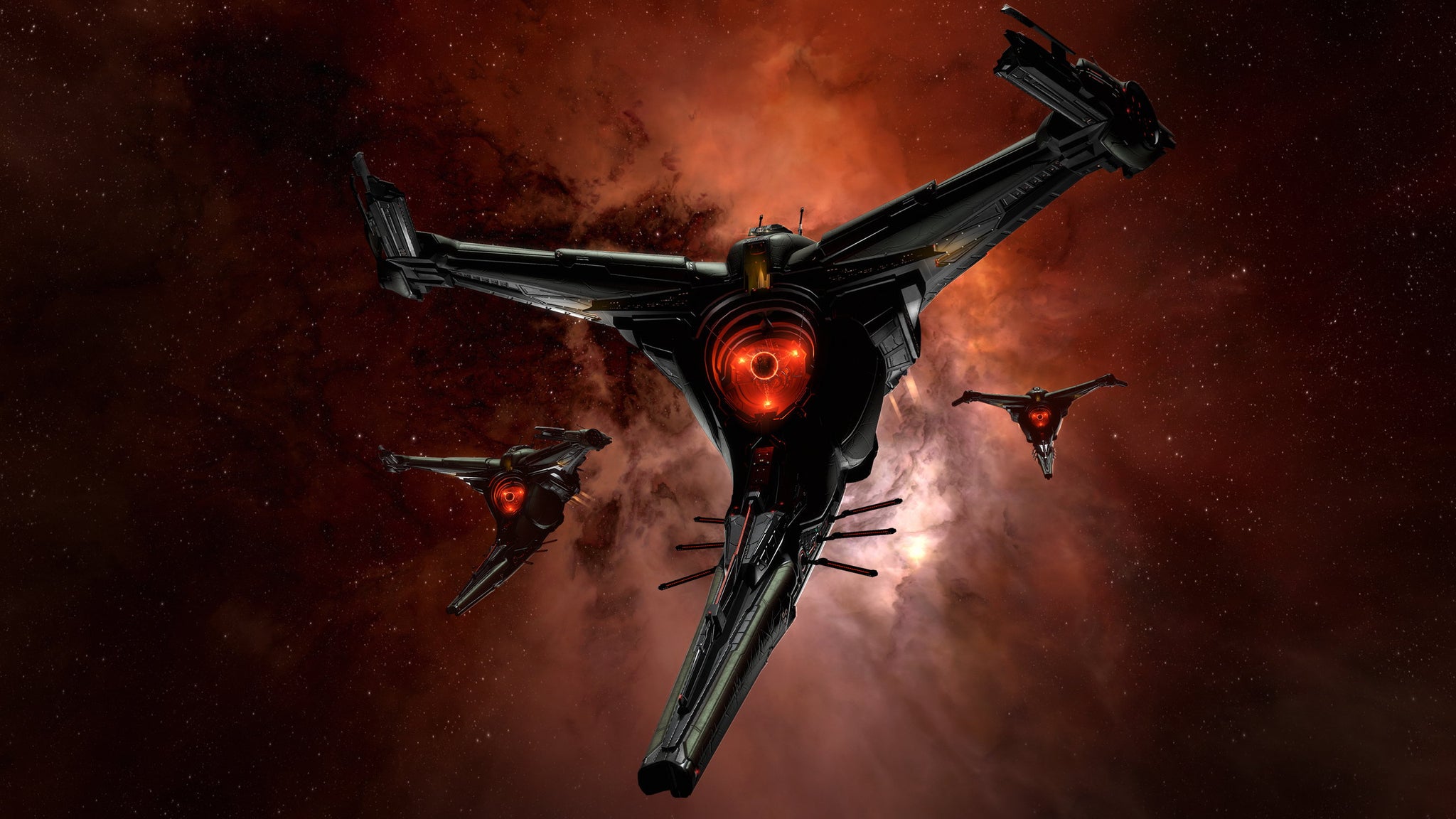
For all its infamous high stakes drama and ruthless corporate betrayals, there's room for a lot more in EVE than most people think. The enormously complex player economy is ultimately about loads of random players all doing their own thing, after all. As Sin said in her EVE Online review, it was players blowing her up - but at least they were "civil" about it.
More so than perhaps any other game, EVE is about interacting with others, but that too can be done as you see fit (ie. other players blowing you up). The jostling alliances of hundreds-strong players make the headlines, but exist alongside countless small groups of friends, pairs, even the occasional solo player making their space life by trade, manufacture, murder, or just quietly shooting endless disposable NPC ships for an hour or two after work to unwind. It's a demanding game for sure, but getting to know even a small corner of it feels satisfying. Seeing familiar names and knowing what they're up to, who they're friends with, and what things you can achieve together is one of the promises that few MMOs deliver on.
It takes some patience and a lot of initiative, and the ability to sigh and shrug some things off. But if you're not enjoying what you're doing in EVE, you can just do something else. Get talking to someone, for heaven's sake. There are opportunities everywhere if you're willing to make the effort. And some good EVE play might even lead you to becoming a very successful business person, as Jeremy Peel uncovered in his "Why EVE Online players rule the world of business, and vice versa" piece.
Warhammer 40,000: Rogue Trader

Warhammer 40,000: Rogue Trader is a classic, party-based CRPG set in what Edwin described as the "festively grim universe of Warhammer" in his Rogue Trader review. The game is a marvel when it comes to setting, with strong writing to boot. It's just a bit of a complicated beast, as Edwin says "the range of things that can happen based on any single character action can be absolutely wild". This is fantastic, but you're also prone to spending hours optimising and building and looking at a messy UI.
No the game isn't perfect, but it's deep and ambitious and like many Owlcat games: rewarding if you can survive a bit of exhaustion. And since launch it's been polished up, making it a more stable experience throughout. Give this a go if you want to sink your teeth into something very meaty indeed.
Distant Worlds Universe

Distant Worlds Universe collects Code Force and Matrix Games' complex space 4X game and its DLC in one package, and it was our strategy game of the year back in 2014. The accolade is still well deserved. It's a sprawling behemoth of a game set in a universe that gets along with or without you. Trade companies do business all across the universe, empires rise and fall, sectors transform from tourist traps into warzones.
Rather than presenting empire building as a series of paths, it's a pure sandbox absent of all but player-defined goals. If that sounds daunting, it is! But that that's OK because Distant Worlds also boasts an unparalleled automation system that breaks the game up into manageable chunks. If war isn't your cup of Earl Grey, you can leave all martial matters up to the extremely competent AI. The same goes for every system. If you really want to ease into things, or if you just fancy exploring space, you can give up control of everything apart from a single ship. Effectively you take a break from being Emperor to become a simple spaceship captain. From that perspective you can just watch the universe evolve around you. When that gets old, you can start switching off the automation of other systems one by one until you find your limit.
As Adam Smith puts it in his Have You Played... Distant Worlds Universe? piece, the game is a "masterstroke is a system of automation that can handle different aspects of your empire", and asks himself the question "Why is this the best space strategy game ever made?" in his Distant Worlds Universe review.
Outer Wilds

The solar system of Outer Wilds may only take a few minutes to cross in your rickety old space ship, but the mysteries of its six planets and accompanying moons, comets and satellites will keep you guessing for hours and hours. Our game of the year in 2019 and awarded a Bestest Best in Brendy's Outer Wilds review, it's a clever space detective game with a Groundhog Day twist. The sun goes supernova every 22 minutes, but thanks to a strange encounter with an ancient alien artefact, your wide-eyed explorer manages to escape being turned into space dust by getting stuck in an infinite time loop. The only way to break it is to solve the mystery of the space-faring Nomai, whose architecture, technology and discoveries shape each and every planet you'll eventually touch down on.
The planets themselves are marvels of design and engineering. From Brittle Hollow, which has a black hole tearing it apart from the inside, to The Hourglass Twins, which are linked by an epic column of sand that gradually drowns one and reveals the secrets of the other with every passing second, the world that Mobius Digital have created here really captures your imagination. It's exactly the kind of mad science fiction you've always dreamed about in games, and each one feels like a distinct ecosystem with its own rules and systems. You're free to explore them at your own pace, too. Driven by hints and secrets you gather by translating ancient Nomai scrolls and texts they've left behind (but never giant 'go here next' icons), Outer Wilds' greatest achievement is simply letting you follow whatever trail of Nomai-shaped breadcrumbs you please as you work to solve this galaxy-wide mystery. Brilliantly written and beautifully crafted, Outer Wilds is a truly stellar stuff.
Stellaris

After years of simulating the politics, economics and wars of history, Paradox decided to head off into the stars with their grand strategy/4X hybrid, Stellaris. Crusader Kings II and Europa Universalis IV had been pumping out weird stories and slices of historical drama for a few years, and more than anything else that's what Stellaris brought to 4X's sector of space.
You can spend hours creating your brand new alien species, right down to their government type and how good they are at making babies, but new technology and special events can transform them into something completely different. Since launch, Stellaris has undergone major overhauls, to the point where the steady stream of new expansions, species and story packs have taken it from a sense of scale, to a sense of scale. It's probably best described as a long-running platform that's being continually readjusted, given Paradox being aware that their barrage of DLCs can scare away new players. One of its latest DLCs BioGenesis lets you breed an existentially terrifying but cool as hell planet-sized monster, for instance.
FTL: Faster Than Light
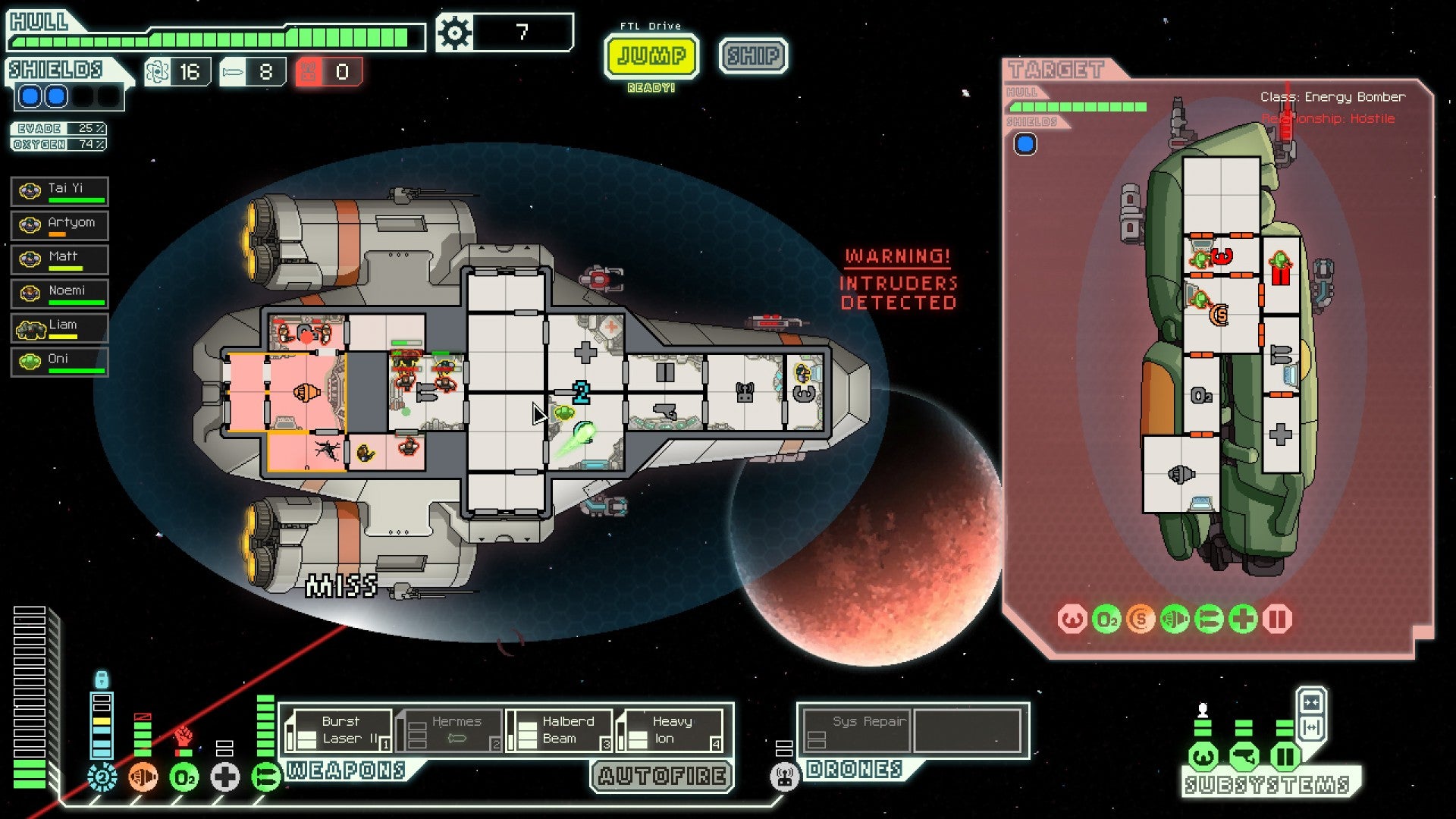
Subset Games' roguelike-like darling deconstructs spaceship sims and presents managing a vessel as a series of disasters and crises. As Graham puts it in his Have You Played... Faster Than Light? piece, "FTL is a Star Trek episode generator". Each of FTL's procedural adventure casts you adrift in space with a single goal: outrun the Federation and bring their secret plans to your Rebel allies. In between you are scouts, pirates, people needing help and horrible space parasites. You can't turn back, though, because the Federation is always nipping at your heels.
In real-time fights against other ships, you'll see your crew slain, your ship boarded by droids, hulls ripped open, explosives teleported in and allies psionically controlled. But you'll be able to do all of that to your enemies as well. Along the way, you'll also find or rescue new crew members, get access to the fanciest of future tech, and hopefully get tough enough to take on the final Federation boss.
Even seemingly blessed runs can end in catastrophe, but each failure becomes another brilliant sci-fi story. The journey of the good ship Ham Sandwich, for instance, ended particularly tragically. After a run in with a pirate, the vessel looked to be done for, with a fires and breaches in multiple rooms and just about every system offline. The engine fire was the worst of the problems and if it wasn't taken care of, the whole ship would be doomed. Our engineer tirelessly fought the fire, even as the oxygen was sucked out of the room through a tear in the hull. With his final breath he managed to put out the fire, the doors could be unsealed, and the rest of the crew repaired the hole. Unfortunately, an encounter with a solar flare one jump later finished the Ham Sandwich off.
No Man's Sky

No Man's Sky has had a bumpy old ride since it first launched in 2016, but after a steady stream of free updates, patches and a lot of jiggery-pokery behind the scenes, Hello Games' epic, procedurally-generated space exploration game has finally become everything we hoped and dreamed it would be. No Man's Sky has gone from strength to strength in an endless stream of updates, adding a proper multiplayer experience, full VR support, shipwreck salvaging, Pokémon-style battles and intergalactic fishing, flora, fauna and customisation options. Heck, you can even fly around in sentient, living, breathing space ships, and if that doesn't shout 'best space game' material, we don't know what does.
It is, without doubt, one of the greatest comeback stories of the last decade. At its heart, No Man's Sky is still a crafting-based survival 'em up that sees you journeying toward the centre of the universe and gradually upgrading your ship so you can jump farther and farther distances, but it's also about flying to and from stunning looking planets and staring slack-jawed at all the mad creatures you'll find therein. Its VR support is also first rate, making it one of the best VR games you can play on PC right now, and it's also one of the best games to play in ultrawide mode, too.
Elite Dangerous

What makes Elite Dangerous so compelling isn't so much about the game as the experience. As Brendy says in his Elite Dangerous review, "The visual splendour of the galaxy is recreated wonderfully". It's the tinkering with and the taking out of a performance car for a Sunday drive, not to rack up more miles, nor to break any speed limits, but to just feel the growl of the engine and the wind comb through what's left of your hair. To remember those carefree days bent over a BBC Micro or blinking angrily into a Lenslok and to forget for a short while that you have to make 357 people redundant in the morning. Elite is a hermetically-sealed escape capsule and it's the best there is. Hell, you could fire the game up and just sit there on a launch pad and the sounds are enough to carry you away, so strong is your ship's presence and so absorbing are the station surroundings.
Taking off, tearing through the station entrance a little too fast and just missing a Python, angling for the next jump, scooping fuel from a blazing sun, spinning the camera around your ship to catch its best profile, starting a fight just for the hell of it, seeing smoke rise from the command console, hearing the screen crack and precious oxygen escaping into space and landing back at base with seconds to spare - these are the moments that make Elite essential. Trading, missions, mining - not so much.
And that's where Elite gets a bit divisive. With Odyssey it introduced a host of additions: FPS combat, missions, settlements and others bits and bobs (read Brendy's review of that here). Many of these feel a bit shallow in comparison to the silky space exploration core they're orbiting, and some find the grindy missions undermine the "go out there and carve your own path" feeling it's meant to evoke. Still, if these things don't bother you too much, then it's well worth a look.
Kerbal Space Program

It could be argued that Kerbal Space Program doesn't belong on this list, because it's a game about trying but (mostly) failing to get into space. Sometimes it's a game about smashing into the ground. Botched attempts and hopeless failures litter the path to success, but it's those disastrous experiments that often prove to be the most fun. Brendy literally described it as a "perfect game of experimentation" in his Kerbal Space Program review back when it left early access.
That might not be the Kerbal Space Program everybody recognises, though. We're sure it feels great to successfully get the Kerbals on and off the Mun without breaking a sweat, but we're just happy to see them drifting around in space. We don't even see our many misadventures as failures anymore because that implies that we haven't done what we set out to do, which is to draw a blank on everything we know about physics and just muck around with some cool rockets.
Oh and if you're slightly unfamiliar with the series, you might be wondering why we've recommended the original Kerbal over the sequel, Kerbal Space Program 2. That's because the first is in a complete, stable and mod-supported state. The sequel? Largely the total opposite. And even past the bugs and the scaffolds, Steve Hogarty said the space exploration sim "falls way short of its ambitions" in his Kerbal Space Program 2 review.
Freespace 2

Was it Freespace 2 that almost killed the space combat genre? Some like to think it was the game's commercial failure that did the damage; that there was no interest in space combat games any more and that if anyone persisted in making one, their sales would suffer the same fate. If it ever was a wreck, we now know that Freespace 2 wasn't left empty for very long, and that the message in the static was soon changed to offer a place of refuge, a rallying point for gamers uninterested in a New World Order of terrorist take-downs.
It's not simply that Freespace 2 is a highly accomplished sequel to what was arguably the finest game in its genre, but that it has become the source of so much creativity over the years. For space genre fans, Diaspora, The Babylon Project, Blue Planet and Wing Commander Saga have been some of the brightest releases in what has, until the last couple of years, been a veritable dark age.
The thing is, standard issue Freespace 2 remains largely unchallenged. Considering it was barely a year in development and many of Volition's ideas for ground attacks and super weapons went unrealised, it offers a number of improvements on the original game. Prior to Freespace 2, capital ships were largely treated as static backgrounds, but now they were part of the foreground, one that fizzed and crackled with explosive energy like never before. Of course Freespace wasn't perfect. But what the Freespace games did better than anything else was put the player in the midst of a series of epic battles, fighting against the odds versus a relentless and unknowable foe. The spectacular weapons, the frenetic and desperate movement that remains a perfect marriage of UI and controller and graphics that were so in advance of everything all those years ago that, even un-modded today, the game can maintain the fantasy. Even in this new space age, one of procedurally-generated universes and forceless feedback joysticks, Freespace 2 stands as a titan of the genre. The Galactica among Battlestars. The game that has lead the genre home.
Oxygen Not Included

Oxygen Not Included is one of Ollie's all-time favourite games. He calls it a "disaster simulator at heart", where you start trapped inexplicably in the centre of an asteroid flush with everything you need to survive, besides food and oxygen. Armed with the ability to command some loyal clones, you set out to harvest the environment and slowly convert it into an ever-expanding space where oxygen is, in fact, included. Go and read his Have You Played... Oxygen Not Included? piece for more of his lovely words.
Don't go yet, though! Nate also became fixated on the game, calling it a "machine for procedurally generating engineering problems" in his Oxygen Not Included review. Since then it's received a "Spaced Out!" expansion that transformed it into a multi-asteroid, spacefaring management game, as well as various DLCs and other quality of life updates to make things smoother and more unhinged. Hey, you may want to get in on this one.
Read this next
- Warhammer 40,000: Rogue Trader's final DLC is now coming in December, with an "unsanctioned psyker" companion who cries tears of blood
- No Man's Sky's 10th anniversary update will let you rule space stations, built floating orbital bases and go on holiday to the sun
- Even 10 years on, Sean Murray feels like he could work on No Man's Sky "forever," even if he knows "there probably is some end date" for it
